The Death of the Manual: Why Fast Shifts Will Never Replace Real Driving
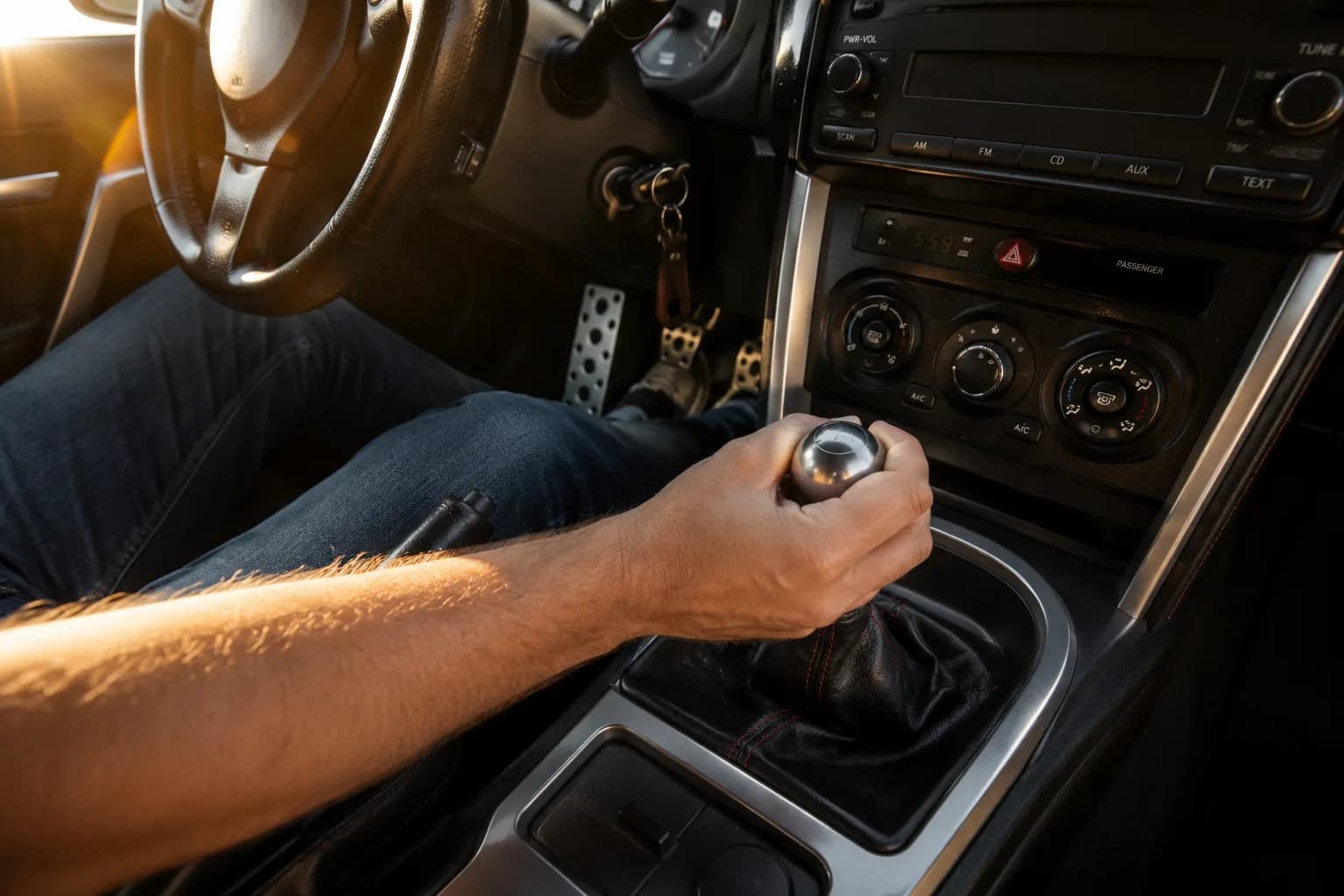
Modern automatic gearboxes and dual-clutch transmissions shift faster than any human foot and hand ever could. But speed on paper is not why we fell in love with driving. As automakers quietly phase out the third pedal in favor of paddle shifters and electric direct-drives, the car community is losing the raw, physical conversation between driver and machine. This article looks at why the manual transmission remains the beating heart of driver involvement, why lap times miss the point, and why three pedals will always matter.
The Death of the Manual: Why Fast Shifts Will Never Replace Real Driving
Look at any modern performance car spec sheet.
Zero-to-sixty times are under three seconds. Dual-clutch gearboxes swap cogs in milliseconds, faster than the blink of an eye. Launch control algorithms calculate tire slip fifty times a second so you do not even have to modulate the throttle.
From an engineering standpoint, it is pure wizardry.
From a driver's standpoint, it is getting boring.
Automakers have spent the last fifteen years chasing numbers on a digital stopwatch, and in the process, they engineered out the one thing that made sports cars special in the first place: human involvement. The manual transmission is disappearing from factory order sheets, and with it goes the tactile soul of driving.
Real driving isn't about letting a computer shift for you. Track your manual build, log your verified time slips, and share your mechanical spec sheet on Car Culture HQ.
Join CarCultureHQ
Claim your free digital garage
Build your ride profile, log modifications, join a crew, and get your build in front of thousands of enthusiasts.
Create your free garageThe Stopwatch Lie
Car manufacturers love automatics because numbers sell cars to people who do not actually drive.
If Brand A builds a coupe that hits sixty in 3.2 seconds with a manual, but Brand B does it in 2.9 seconds with an eight-speed automatic, Brand B wins the magazine comparison test.
That logic works great if your only goal is winning arguments in internet comment sections. But nobody drives a spec sheet down a twisting mountain road on a Sunday morning.
When you drive a modern multi-speed automatic hard, you pull a plastic paddle behind the steering wheel, an electronic solenoid clicks, and the computer handles the rest. You are not shifting a gear; you are sending a request to a server that decides whether it wants to grant your wish.
The car is doing the heavy lifting. You are just a passenger holding the wheel.
The Physical Language of Three Pedals
A manual gearbox does not let you be lazy. It demands your hands, feet, eyes, and ears to work in complete sync.
Think about what actually happens during a proper heel-toe downshift into a tight second-gear corner:
Your right foot brakes hard while the edge of your shoe blips the throttle.
Your left foot stabs the clutch pedal to disconnect the flywheel.
Your right hand guides the shifter through the mechanical gate, feeling the brass synchro's line up.
You release the clutch smoothly as the engine revs match the input shaft speed, settling the chassis without upsetting rear grip.
"A perfect downshift doesn't give you a trophy or a faster lap slip. It gives you something better: the satisfaction of knowing you did it yourself."
When you nail that sequence, the satisfaction is immediate. It does not matter if a modern automatic could have done it three tenths of a second quicker. You created that balance with your own mechanical skill.
When Driving Becomes an Appliance
When you remove the clutch pedal, you disconnect the driver from the powertrain.
You can drive a paddle-shift car fast while thinking about your grocery list or checking a phone notification at a red light. The machine covers for your mistakes. It prevents money shifts, smooths out rough throttle inputs, and keeps you separated from the mechanical reality of how torque moves through a differential.
A manual forces you to be present. If you miss a gear, you hear it. If you dump the clutch too fast, you stall in front of everyone. If you choose the wrong gear entering a corner, the chassis bogs down or gets twitchy.
That risk and responsibility is what makes driving engaging. When there are no consequences for poor technique, there is no reward for mastery.
The Last Stand in Grassroots Garages
Mainstream manufacturers might be abandoning the third pedal to cut assembly costs and meet fleet emissions targets, but the enthusiast community is doing the opposite.
Look at the used market and the grassroots scene. Manual versions of almost every modern classic trade for double the price of their automatic twins. Enthusiasts are spending thousands of dollars and hundreds of garage hours doing manual swaps on chassis that never came with a stick from the factory.
We are not holding onto manual transmissions because we hate modern technology. We hold onto them because we value the connection over the convenience. As long as there are people who care about how a car feels rather than how fast a computer can shift it, the manual transmission will always have a home on the pavement.
Join CarCultureHQ
Claim your free digital garage
Build your ride profile, log modifications, join a crew, and get your build in front of thousands of enthusiasts.
Create your free garageFrequently asked questions
Why are car manufacturers eliminating manual transmissions?
Automakers are dropping manuals because modern automatics deliver slightly better fuel economy on standardized tests, shift faster for marketing acceleration figures, and integrate more easily with modern electronic safety and autonomous driving systems.
Is a dual-clutch transmission (DCT) considered a manual?
No. While a dual-clutch transmission uses physical clutches and gears inside the casing rather than a torque converter, the shifting process is entirely computer-controlled and does not involve a manual clutch pedal or mechanical shift linkage operated by the driver.
Why are manual cars worth more on the used market?
Because they are increasingly rare and highly sought after by true driving enthusiasts. As modern new cars become more automated and sanitized, analog manual cars offer a level of tactile engagement that newer vehicles cannot replicate.
Is it difficult to learn how to drive a manual car?
Not at all. It requires a few hours of patient practice in an empty parking lot to build the muscle memory for clutch bite points and throttle modulation. Once learned, it becomes second nature.
Comments
Join the conversation on The Death of the Manual: Why Fast Shifts Will Never Replace Real Driving. Keep it civil — admins moderate reports.
Loading comments…