The 2 AM Drive: Why Empty Highways and Cold Air Are the Best Therapy
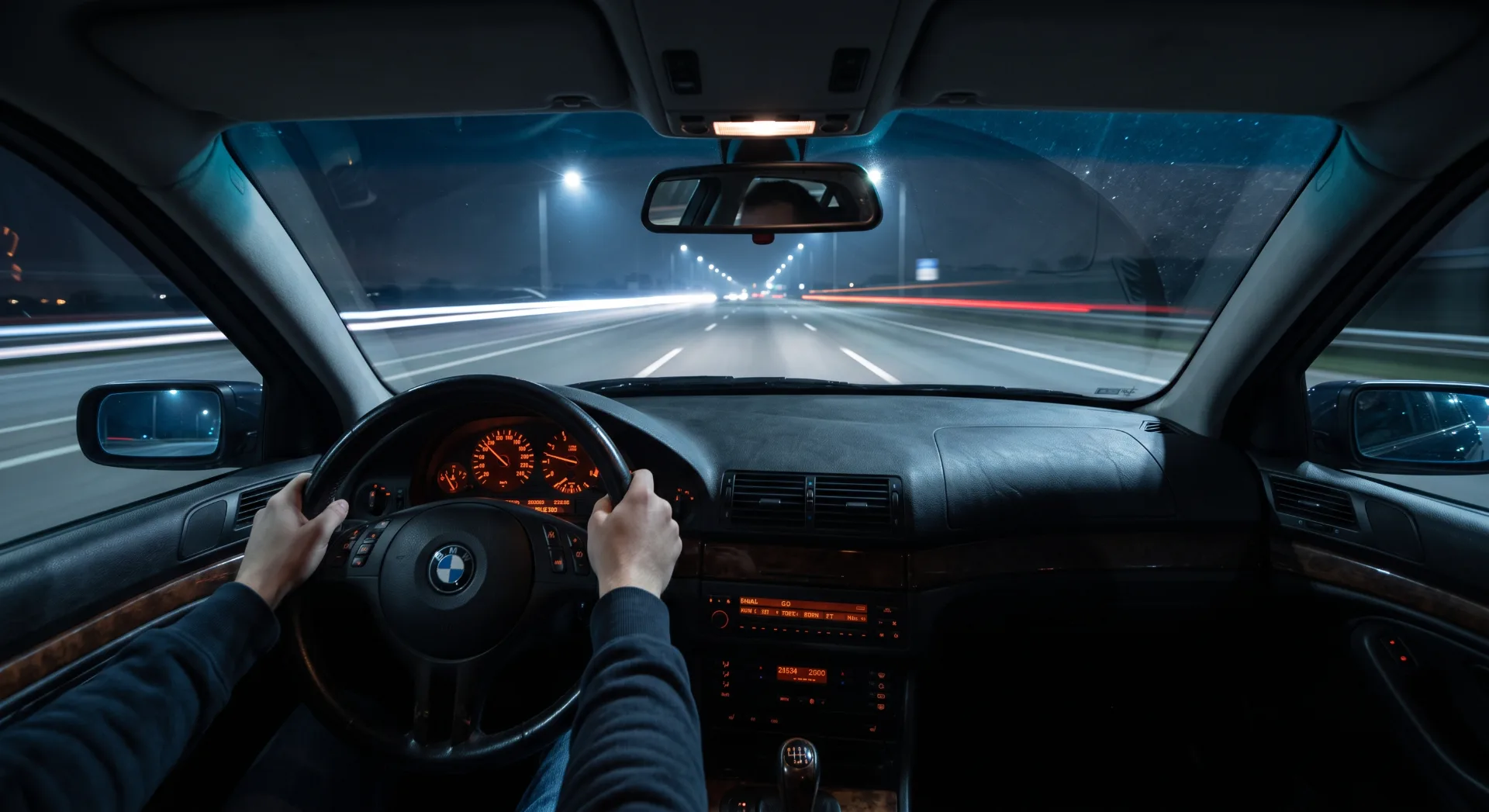
Late at night, driving stops being about getting somewhere and turns into a way to reset your brain. With no traffic, no notifications, and an open stretch of asphalt, the 2 AM drive offers a kind of quiet focus you simply cannot find anywhere else.
The 2 AM Drive: Why Empty Highways and Cold Air Are the Best Therapy
Anyone who actually loves cars knows the feeling. It is past midnight. The house is dead quiet, your phone screen is burning your retinas, and your mind is spinning its wheels over things you cannot fix until tomorrow anyway.
You pick up your keys. You do not check GPS, and you do not set a destination. You just walk out to the driveway, fire up the engine, and pull out onto the dark street.
Ten minutes later, you are on an empty interstate. The commuter gridlock from earlier in the day has evaporated. It is just you, the steady hum of tires against asphalt, and a playlist you have not listened to in months.
That is not just burning fuel. That is a hard reset.
Join CarCultureHQ
Claim your free digital garage
Build your ride profile, log modifications, join a crew, and get your build in front of thousands of enthusiasts.
Create your free garage1. Zero Noise, Zero Multitasking
During daylight hours, driving is mostly defensive survival. You are dodging delivery vans, braking for distracted drivers, and listening to GPS voice prompts talk over your podcast. Your brain is split across ten different tasks at once.
At 2:00 AM, all of that friction disappears.
The highway turns into a wide, open ribbon. With nobody in front of you and nobody riding your bumper, the mental clutter drops away. Driving shifts into steady muscle memory. You settle into a rhythm where your only job is keeping the car between the lines and matching the speed of the road.
Psychologists call this a state of effortless attention. Enthusiasts just call it a clear head.
2. The Cockpit as an Unplugged Sanctuary
Where else can you go today where nobody expects an immediate reply from you?
Inside your car at night, you are completely insulated from the outside world. No work messages popping up. No household chores staring at you from the corner of the room. Just the glow of the dashboard lights, the feedback coming through the steering wheel, and whatever audio matches your mood.
Whether you are blasting music that hits you right in the chest or riding in dead silence with only the mechanical hum of the engine, the cabin belongs entirely to you. You set the temperature, you pick the road, and you control the pace.
3. Cold Air and the Physical Reset
There is a specific moment during every great night drive that shifts your mindset.
You crack the window an inch or two, and a rush of crisp, cold air cuts straight through the cabin. It hits your face, clears the stale air, and snaps your senses awake.
The tactile feel of the steering wheel, the gentle pull of G-forces through a sweeping highway cloverleaf, and the clean beam of your headlights slicing through the dark all work together. It pulls you out of your racing thoughts and drops you right into the physical world. You are present, grounded, and actually paying attention to what is right in front of you.
4. Moving Forward When You Feel Stuck
Sometimes you do not need answers; you just need motion.
When life feels deadlocked or overwhelming, staying in one room makes the walls close in. Getting behind the wheel gives you forward momentum. Watching lane markers and exit signs disappear in the rearview mirror creates a subtle psychological shift. You are moving, making progress, and physically putting distance between yourself and whatever is stressing you out.
By the time you pull back into your driveway, nothing about your problems has magically solved itself. But your heart rate is down, your thoughts are organized, and you can finally shut off the engine and sleep.
Join CarCultureHQ
Claim your free digital garage
Build your ride profile, log modifications, join a crew, and get your build in front of thousands of enthusiasts.
Create your free garageFrequently asked questions
Why does driving late at night feel so therapeutic?
Late-night driving removes the cognitive overload of daily commuting. Without traffic congestion, abrupt stops, or digital interruptions, your mind enters a flow state. The steady sensory feedback of the road allows you to decompress and process your thoughts without feeling overwhelmed.
Does night driving improve mental clarity?
Yes. Operating a vehicle requires enough baseline focus to keep you grounded in the present moment, which interrupts repetitive worrying and mental loops. This active focus, paired with solitude and music, creates space for structured, calm thinking.
What makes a late night drive different from a daytime drive?
Daytime driving is typically utility-driven, time-sensitive, and packed with hazards and traffic friction. A 2 AM drive is open-ended. The absence of other motorists and ambient noise shifts driving from a stressful obligation into an immersive sensory experience.
How can I make a night drive safer and more relaxing?
Stick to well-lit, familiar highway corridors or scenic ring roads where unexpected hazards like wildlife or road construction are minimal. Ensure your headlights, windshield, and mirrors are clean to reduce eye strain, keep your phone tucked away on silent, and never drive when you are physically fighting exhaustion.


Comments
Join the conversation on The 2 AM Drive: Why Empty Highways and Cold Air Are the Best Therapy. Keep it civil — admins moderate reports.
Loading comments…