The Holy Grail of JDM Cars: Which 90s Legends Are Actually Worth Owning?
Written and reviewed by the CarCultureHQ Editorial Team. See our Editorial Policy for sourcing and corrections.
Estimated Reading Time: 8 Minutes
Summary: Prices for 1990s Japanese performance icons exploded over the last decade. But market price does not always match driving reality. At Car Culture HQ, we take a look past the auction hype to separate the JDM icons genuinely worth your money from the overhyped projects that belong on a bedroom poster instead of in your garage.
The Golden Era Got Expensive. Now What?
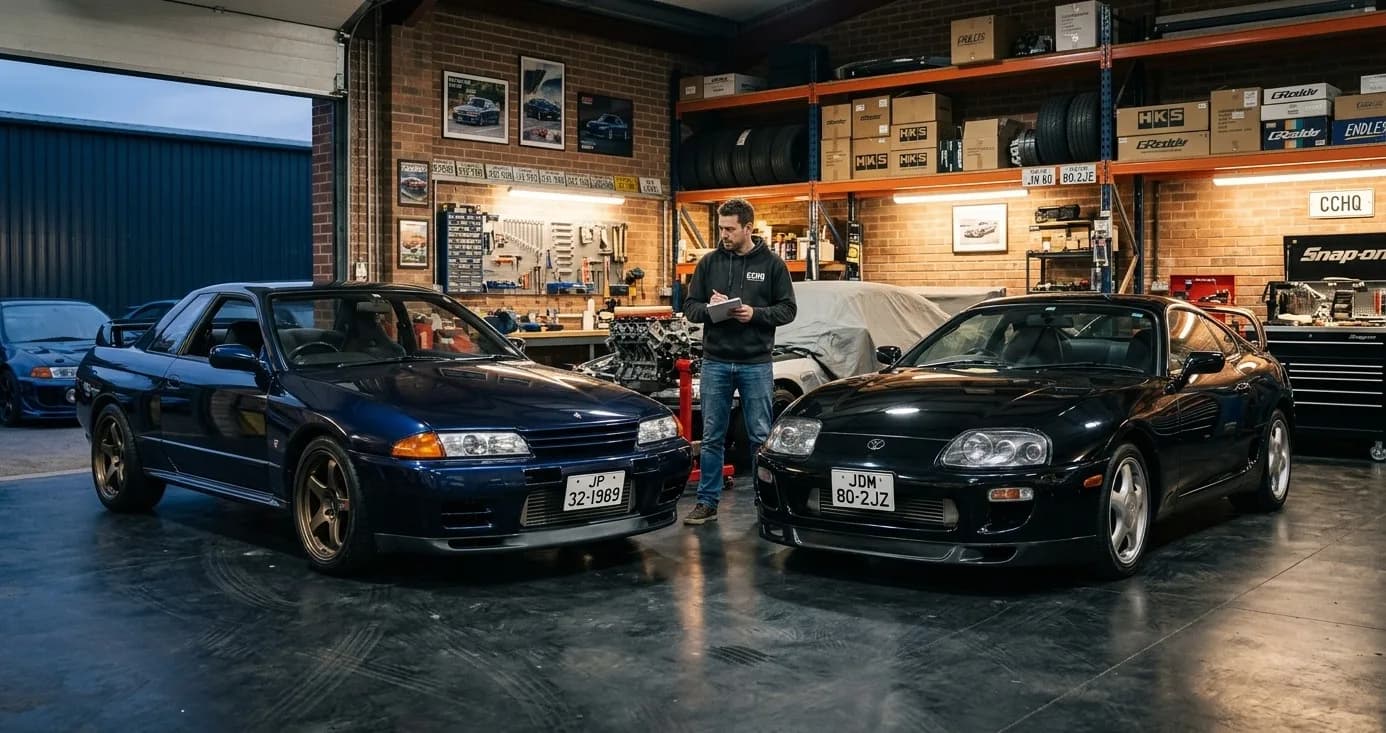
If you grew up watching VHS tapes of Best Motoring or spending late nights playing Gran Turismo, you already know the names. The Nissan GT-R. The Toyota Supra. The Mazda RX-7. The Honda NSX.
For years, these cars were the ultimate performance bargains. You could grab a clean R32 Skyline or a twin-turbo Supra for less than the cost of a used family sedan, throw a few bolt-on parts at it, and run down V8s all day long.
Those days are long gone.
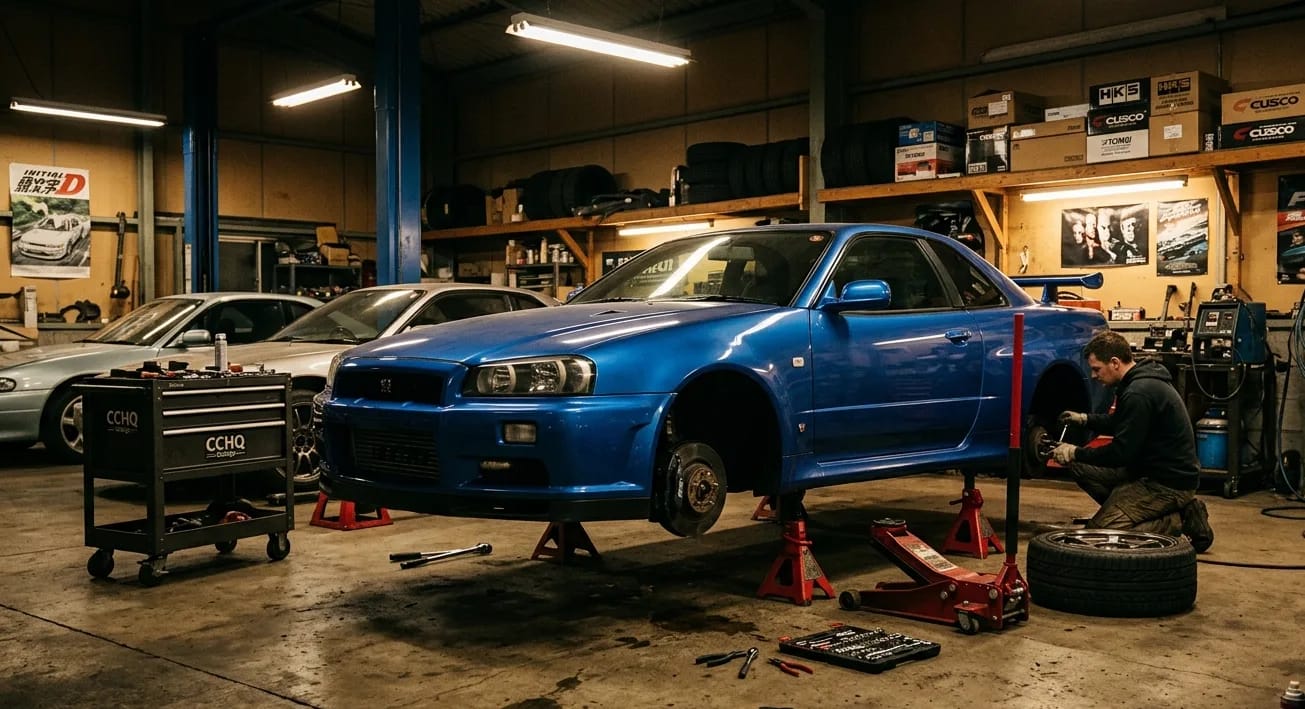
Today, seven-figure auction results and six-figure dealer listings have turned 90s Japanese sports cars into serious investments. But here is the problem: financial value is not the same thing as ownership value. A $120,000 car that spends eleven months a year on jack stands waiting for custom wiring harnesses is not a legend. It is an expensive garage ornament.
At Car Culture HQ, we cut through the social media noise. We love these cars for what they do on a back road, not what they sell for on an auction site. If you are sitting on capital and deciding where to drop your hard-earned money, here is the honest truth about which JDM cars worth buying actually deliver when you turn the key.
Join CarCultureHQ
Claim your free digital garage
Build your ride profile, log modifications, join a crew, and get your build in front of thousands of enthusiasts.
Create your free garage1. The Cars That Truly Live Up to the Hype
Honda NSX (NA1 / NA2): The Masterclass
When Honda set out to build the NSX, they benchmarked the Ferrari 348. They ended up building something far better: an mid-engine supercar you could actually drive every single day without the engine catching fire.
Why it is worth it: The chassis tuning, developed with direct input from Ayrton Senna, remains unbelievable. The manual steering rack gives you feedback that modern electric power steering simply cannot replicate. The VTEC V6 screams to 8,000 RPM, and because it is a Honda, the HVAC system actually works.
The Reality Check: Parts are expensive, and body panels are custom aluminum. If someone backs into your fender in a parking lot, you are not picking up a cheap replacement at a local junkyard.
Verdict: Worth every penny if you want a pure driver's car that retains its value.
Ownership Tip: Look for cars with documented timing belt and water pump services. Avoid heavily modified examples with aftermarket widebody kits that ruin the factory aluminum architecture.
Mitsubishi Lancer Evolution (Evo IX): The Street Weapon
The Evo IX represents the absolute peak of Mitsubishi's rally-bred engineering. The 4G63 engine combined with MIVEC variable valve timing and the Super Active Yaw Control system turned average drivers into back-road heroes.
Why it is worth it: Out of every performance car built in the 2000s, few cover ground as fast on a winding road. The steering turn-in is razor-sharp, the boost hits hard, and the four-door practicality means you can take your friends along for the ride.
The Reality Check: The interiors are pure economy car. You are paying for drivetrain hardware, not soft-touch plastics. Transfer cases can be fragile if the previous owner launched the car repeatedly at drag strips.
Verdict: Buy one now if you want pure performance. Clean, unmodified examples are getting harder to find every month.
2. The Great Cars With Heavy Caveats
Mazda RX-7 (FD3S): The Flawless Nightmare
Visually, the FD RX-7 is perhaps the most beautiful sports car ever to come out of Japan. Its lightweight chassis and sequential twin-turbo rotary engine create a driving experience that feels almost weightless.
Why we love it: The front-mid engine layout gives it perfect balance. When an FD is running correctly, nothing else touches it for chassis responsiveness.
The Hard Truth: That sequential turbo vacuum system contains dozens of heat-sensitive rubber hoses hiding under the upper intake manifold. Combined with thermal stress on apex seals, owning an FD requires constant mechanical sympathy and a dedicated rotary specialist on speed dial.
Verdict: Only buy an FD if you treat maintenance as a hobby. If you want a turn-key car you can ignore for six months, pass on this one.
Toyota Supra Turbo (MK4 / A80): The Drag Strip Icon
The 2JZ-GTE engine earned its legendary status fair and square. You can double its factory horsepower output on stock internal components, making it a favorite for high-horsepower builds.
Why people want it: It is a pop-culture titan. The engine is virtually bulletproof, and the six-speed Getrag V160 transmission can handle massive torque.
The Hard Truth: Stock prices are inflated by pop-culture nostalgia. As a sports car, the MK4 feels heavy and GT-focused compared to a light RX-7 or an agile NSX. You are paying a heavy premium for the nameplate.
Verdict: If you want a fast highway cruiser with iconic styling, it delivers. But dollar-for-dollar, other JDM cars offer far better handling for much less money.
3. The Smart Money Selections
Honda Integra Type R (DC2)
Front-wheel drive usually gets dismissed by purists, but the DC2 Type R proves that line of thinking wrong. With a seam-welded chassis, helical limited-slip differential, and a hand-ported B18C5 engine, it remains one of the finest front-wheel-drive performance cars ever engineered.
What makes it great: You get pure mechanical feedback without paying exotic car prices. Parts are accessible, maintenance is straightforward, and the driving engagement is top-tier.
What to watch for: Theft was a massive issue for these cars, meaning many have stolen-and-recovered histories or unmatching VIN tags. Always check body stampings carefully before buying.
Nissan Skyline GT-R (R32)
The car that earned the "Godzilla" nickname by dominating Australian touring car racing. Its ATTESA E-TS all-wheel-drive system sends power to the rear wheels until it detects slip, giving you a rear-drive feel with all-wheel traction when you exit a corner.
What makes it great: The twin-turbo RB26DETT engine sounds incredible, and the driving dynamics feel far more modern than its late-80s roots suggest.
What to watch for: Rust in the rear rocker panels and strut towers is common. Rubber bushings, coil packs, and mass airflow sensors are often aged out and require replacement immediately upon import.
4 Practical Steps Before You Buy
Importing or buying a 30-year-old Japanese car requires careful research. Follow this simple checklist before transferring any funds.
The Verdict: Drive What You Love
The JDM market is no longer a secret. The era of cheap project cars imported for pocket change is over. But if you stop looking at these cars as financial assets and start evaluating them as driving machines, the picture becomes clear.
Buy the car that makes you want to wake up at dawn on a Sunday morning just to drive down an empty road. Skip the garage queens with low mileage that sit under covers waiting for the next auction cycle. The real legends are the ones that make every mile count behind the wheel.
Join CarCultureHQ
Claim your free digital garage
Build your ride profile, log modifications, join a crew, and get your build in front of thousands of enthusiasts.
Create your free garageFrequently asked questions
Are 90s JDM cars still good daily drivers?
While cars like the Honda NSX or Lancer Evolution are reliable enough for frequent use, driving a 30-year-old car daily means dealing with aging safety tech, hard-to-find body parts, and cabin noise compared to modern cars. They work best as secondary weekend vehicles.
Is the Nissan Skyline GT-R R32 reliable?
The engine block and drivetrain are robust, but electrical components, coil pack wiring harnesses, vacuum lines, and rust present ongoing maintenance challenges. Regular upkeep is necessary to keep an R32 running smoothly.
Why are Toyota Supra MK4 prices so high?
High prices stem from a combination of pop-culture popularity, the legendary strength of the 2JZ-GTE engine, low production numbers, and aggressive bidding by collectors treating them as financial assets.
Which JDM car is easiest to maintain?
Honda performance models like the Integra Type R or Civic Type R are generally the easiest to maintain. They feature straightforward engine layouts, excellent aftermarket support, and shared parts with high-volume production models.


Comments
Join the conversation on The Holy Grail of JDM Cars: Which 90s Legends Are Actually Worth Owning?. Keep it civil — admins moderate reports.
Loading comments…