The First Choice: Drag Racing vs. Road Racing (And Why You Must Choose)
Written and reviewed by the CarCultureHQ Editorial Team. See our Editorial Policy for sourcing and corrections.
Read Time: 9 minutes
Summary: The choice between drag racing and road racing isn't about speed. It is a fundamental decision about how you want to interact with your machine, how you manage risk, and what you consider a victory. This is a look at why these two worlds never meet, why they shouldn't, and how to know which tribe you actually belong to.
Forget Speed. It’s About Who You Are.
Let’s be honest right now. The argument is tired. "My car does 10s in the quarter." "Yeah, but my car takes corners." It is the automotive equivalent of "My dad can beat up your dad." It is meaningless noise.
If you are reading this, you are an enthusiast. You aren't arguing about which kind of racing is faster. You are trying to figure out where you fit. You're trying to decide where to spend your money, your weekends, and your sanity.
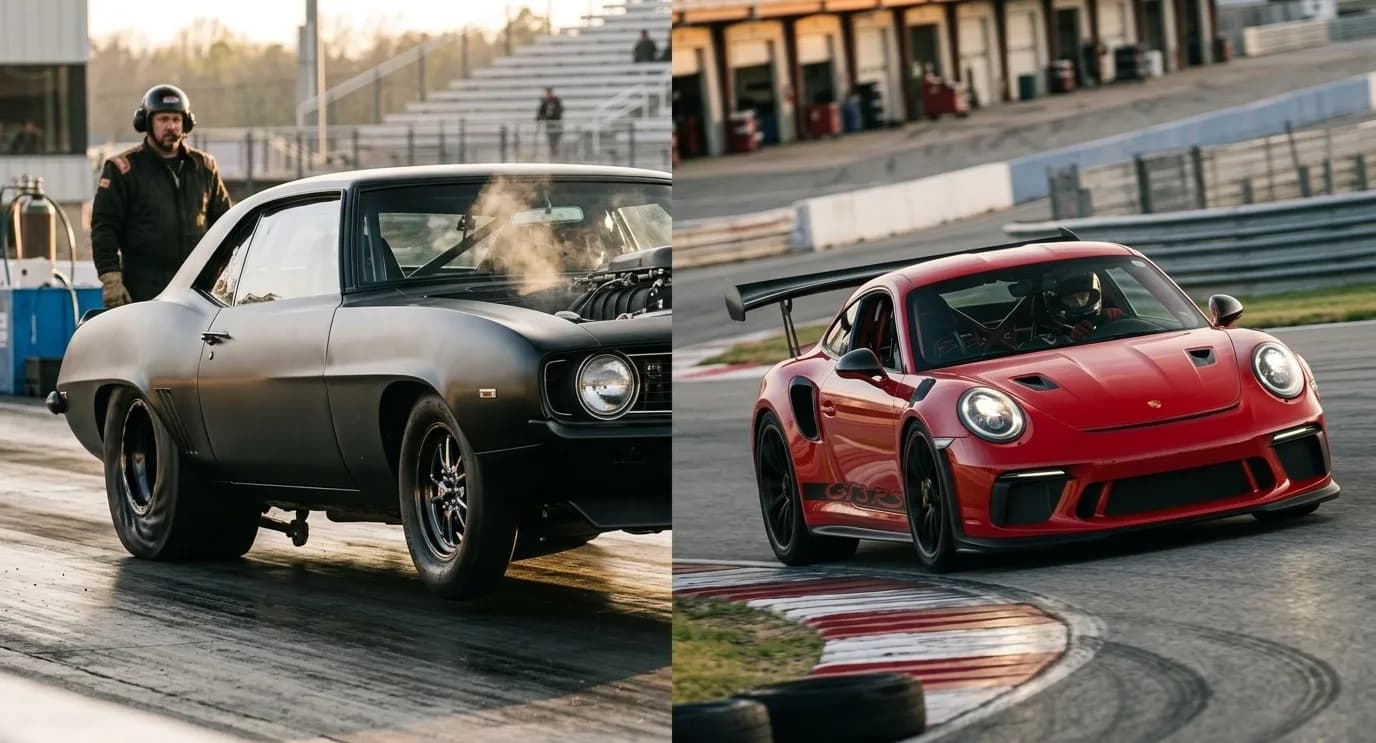
I have sat on pit lane for endurance races, and I have stood behind the water box at drag strips. These aren't just different cars; they are different universes. Drag racing is physics, engineering, and raw binary execution. Road racing is endurance, rhythm, and strategy.
To know where you belong, you have to stop comparing the speed and start comparing the problems.
Join CarCultureHQ
Claim your free digital garage
Build your ride profile, log modifications, join a crew, and get your build in front of thousands of enthusiasts.
Create your free garageDrag Racing: Binary Engineering Under Pressure
Here is the scene. You are in the stage lanes. The air is heavy with the smell of tire smoke, race gas, and sweat. You can feel the vibration of the big-block pro-mods two slots ahead rattling your chest cavity. It is loud. It is disorganized. It is raw.
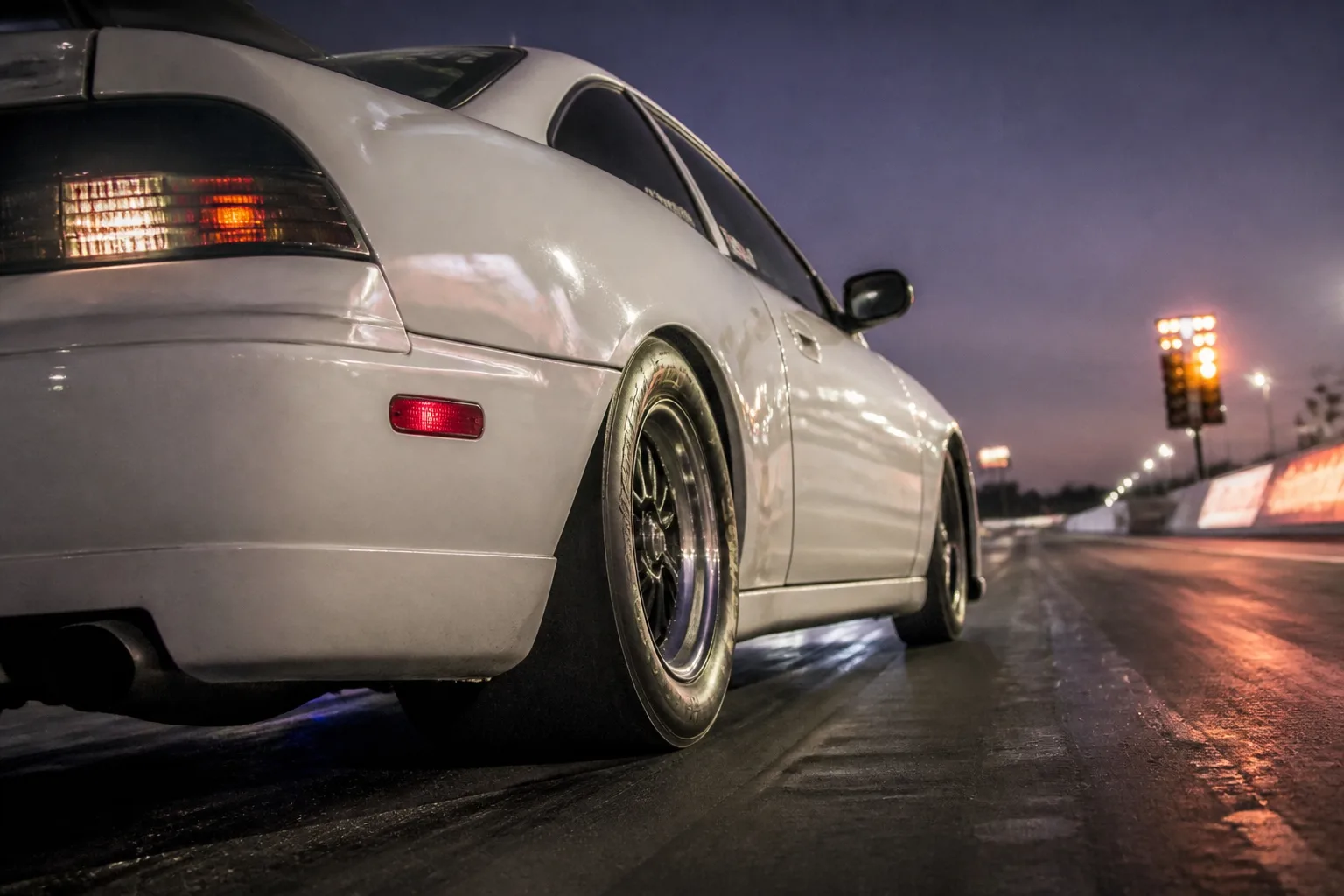
Then, you are up. You water box, do your burnout, and pull into the beams. The pro-tree lights. Go.
Drag racing is 10 seconds (or less, if you're good) of absolute, intense focus. Your world shrinks to the Christmas tree and the horizon. There is zero time to think, only to execute. You launch. You feel the massive G-force of the slicks biting. You are trying to keep the nose straight. You are shift-light watching. Finish line. Parachute (or heavy brakes). Done.
That’s it. In that time, you have not had a moment of strategic thought. The strategic thought happened before you even staged.
The Problem in Drag Racing: Breaking the Trap
In drag racing, the enemy is breakage and consistency. You have built a machine that is, by design, trying to explode its drivetrain onto the asphalt. You are pushing components to the absolute jagged edge of their existence for the precise reason of a decimal point.
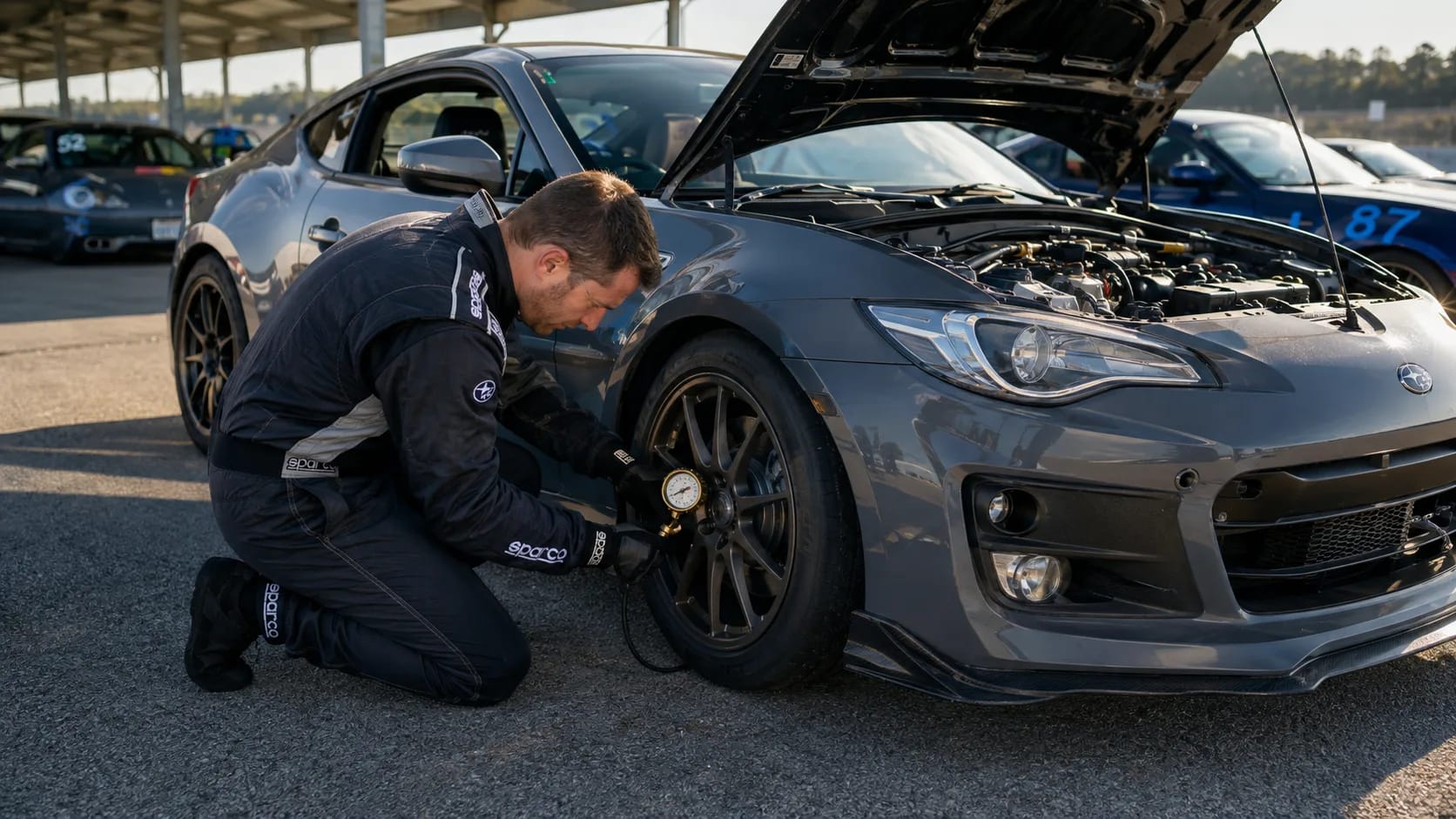
Victory in drag racing isn't about the other car; it’s about your time slip. You win by engineering a car that launches exactly the same way, every time, without turning its transmission into metal soup. If you love diagnosing the minutiae of engine management, shock valving for weight transfer, and reading tire pressure data after a 10-second blast, this is your world. It is the joy of perfect, repeatable execution under immense pressure.
Road Racing: Rhythm, Conservation, and Endurance
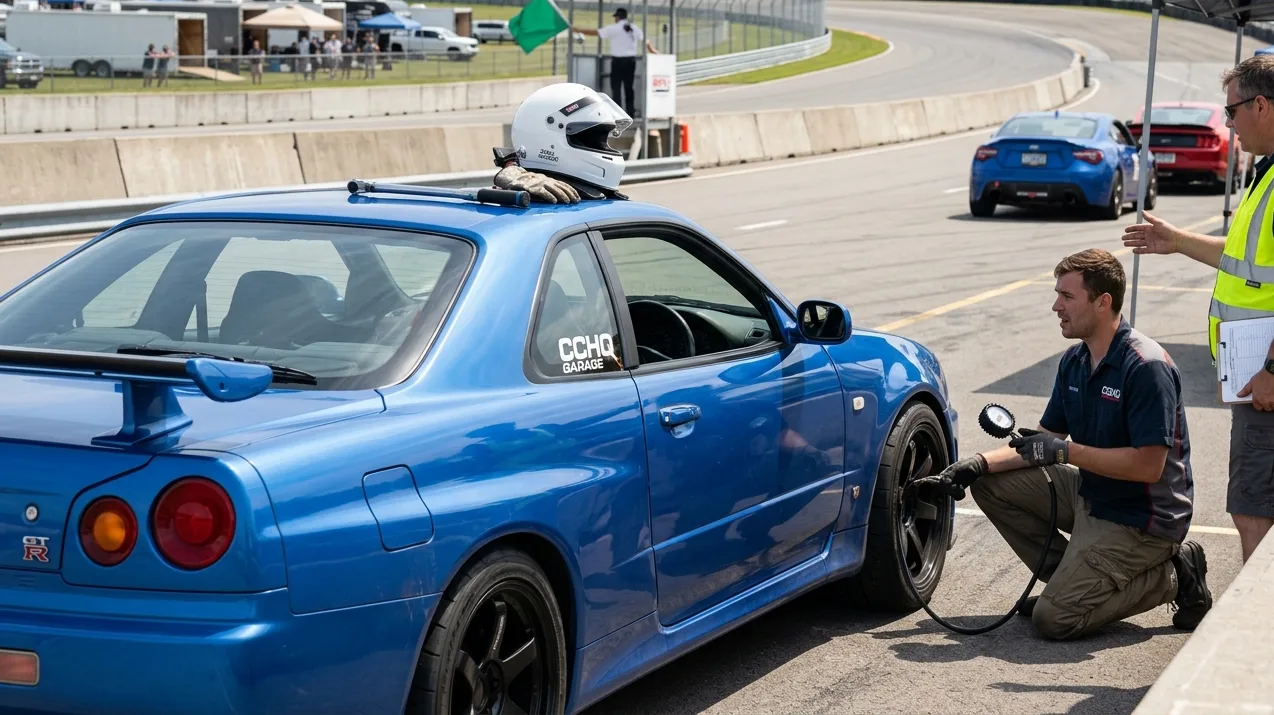
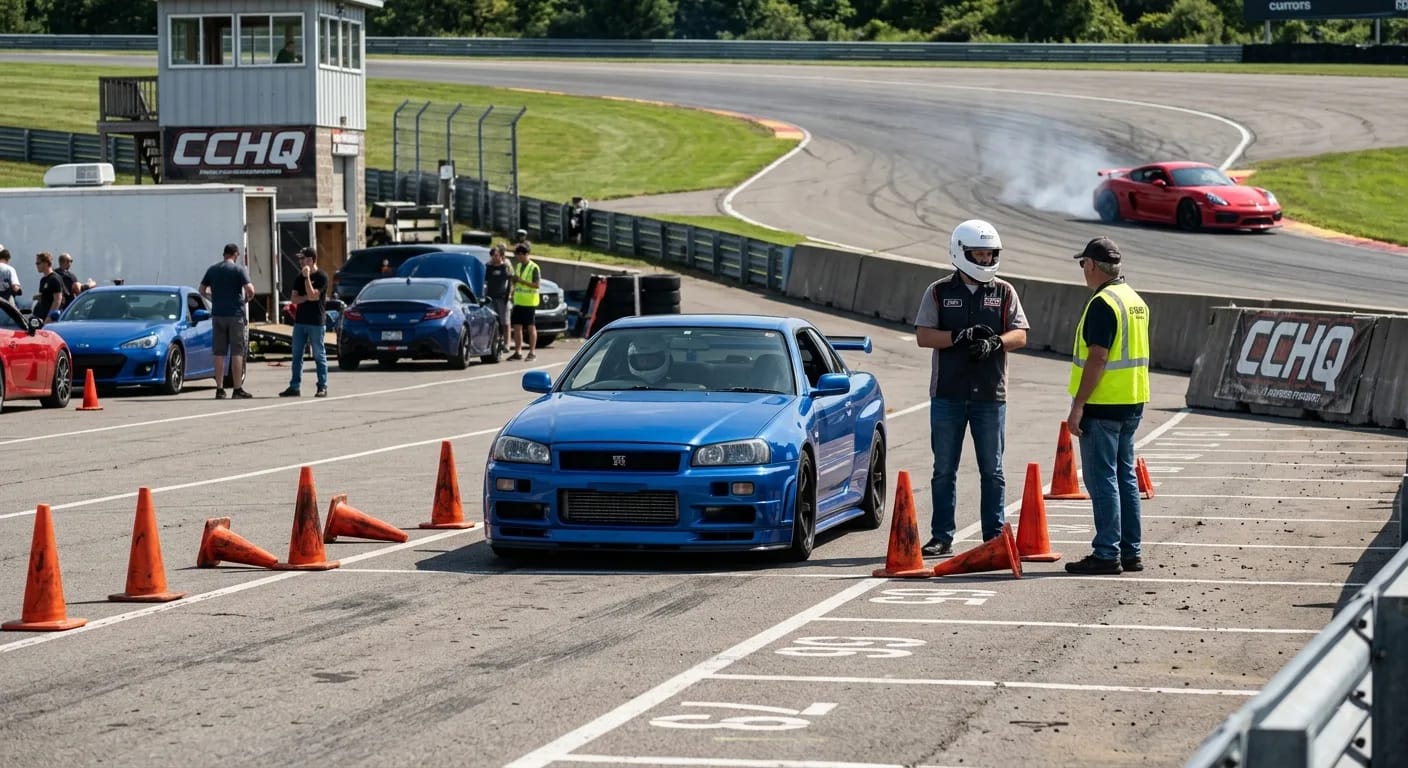
Now, flip the scenario. You are at Virginia International Raceway (VIR), in the grid lane. It’s early morning, cool and misty. You hear the high-pitch whine of flat-plane crank V8s and turbo-fours warming up. It is quieter here, focused. It smells like brake fluid and gear oil.
You are on a grid for a 30-minute sprint or perhaps the first driver of a 24-hour enduro. You pull out. Warm-up lap. The green flag waves.
Road racing is not a single action. It is a long, rhythmic conversation with your car and the track. It is the constant negotiation of hundreds of variables over thousands of corners.
You need to hit the same apex for 20 laps straight, but your tires are degrading. Your fuel load is light. The ambient temperature is rising. You are constantly managing resources. Road racing is strategic.
The Problem in Road Racing: Managing the Decline
In road racing, the enemy is resource management and mental fatigue. Victory isn't binary. You don't win by being faster on lap one. You win by conserving your tires so they are still useful on lap 50. You win by managing your fuel load. You win by having the stamina to hold perfect concentration for a 2 hour stint without a single error.
One missed apex, one poor downshift, and your race is over. The satisfaction here isn't the explosion of power; it's the seamless, consistent flow of momentum. It’s the art of linking corners until you feel one with the car. If you find fulfillment in stamina, strategic resource management, and finding the perfect flow, this is your tribe.
The Choice dictates everything, especially your budget
This is not a purely emotional choice. What kind of racing you choose dictates your garage life.
The Breakdown
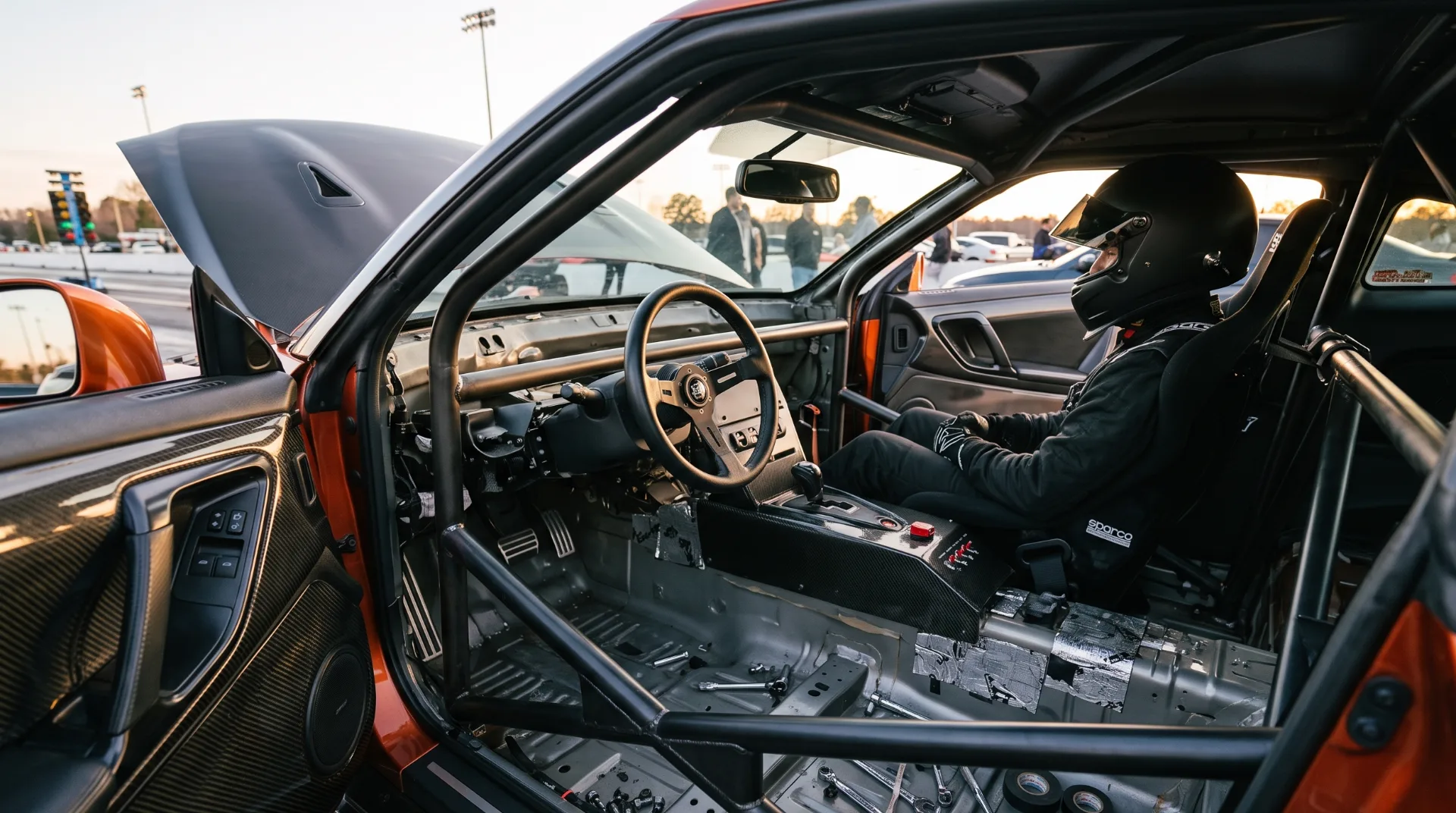
A drag car engine is built for maximum power density for 10 seconds. Maintenance is reactive and aggressive. If you break an axle, you change an axle. Victory is binary: you are faster or you are broken.
A road car engine is built for durability over hours. Maintenance is proactive and strategic. You monitor tire wear and brake pad health. You don't "fix" failures; you manage component decline.
The Verdict: Who Are You?
We aren't here to pick a winner. CCHQ has expertise in both. We have partners who build perfect 8-second S550 Mustangs, and others who maintain endurance-winning Porsche GT4s. They don't cross-pollenate because they value different things.
So, who are you?
Do you want the instant, terrifying gratification of a perfect execution where your machine is a binary bomb of engineering? Do you enjoy analyzing the mechanical logic of a drivetrain under 1000 horsepower? Get a helmet and a slick-tired RWD machine and hit the drag strip.
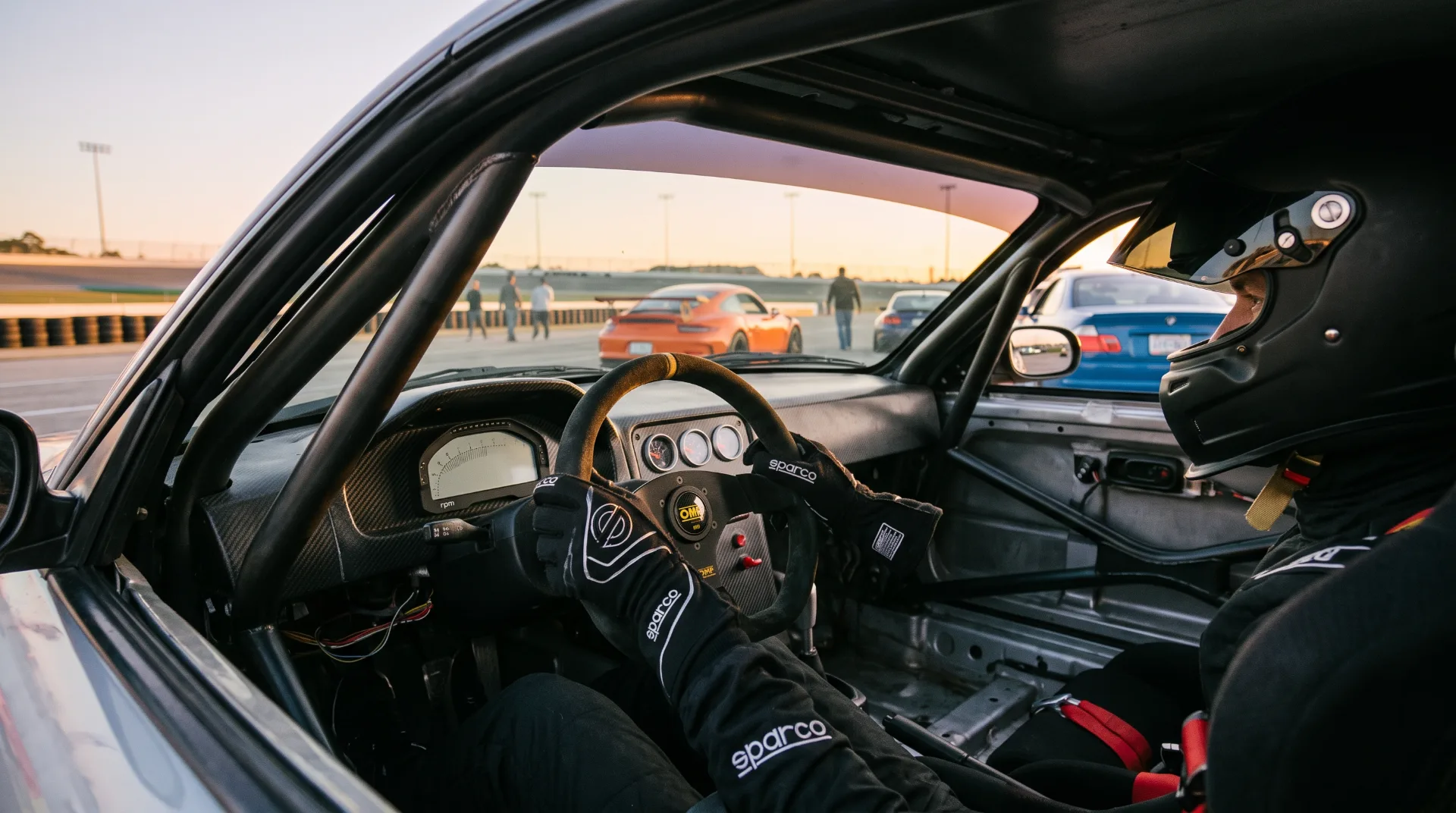
Do you find fulfillment in strategic planning, mental endurance, and the rhythmic art of conserving momentum over hundreds of corners? Do you like the challenge of managing a machine's decline over hours? Go buy a track-prepped Miata and start running HPDEs on a road course.
Both are speed. But only one will feed your soul. Make the choice that matches your personality.
Join CarCultureHQ
Claim your free digital garage
Build your ride profile, log modifications, join a crew, and get your build in front of thousands of enthusiasts.
Create your free garageFrequently asked questions
Can I prepped a street car for both drag and road racing?
In a meaningful way? No. You can do HPDE track days in a stock-ish Mustang and you can take it to a test and tune drag strip night. But any real specialization, like a suspension set up for weight transfer or massive braking, will make it useless for the other. You can't optimize for both.
Which discipline is safer?
That’s a complicated question. Drag racing is short and controlled, but failures (like engine explosions or crashes) are often catastrophic. Road racing has more sustained risk (hitting tire walls, other cars), but modern track design and safety gear mitigate that. Both carry inherent, significant risks. Safety is your top modification.
How do I get started in either?
For Drag: Go to a public "Test & Tune" night at a local strip with your street car. It is the easiest, lowest-barrier entry. For Road: Find a local organization like NASA (National Auto Sport Association) or SCCA (Sports Car Club of America) that hosts High Performance Driving Events (HPDE). They will provide in-car instruction.
Comments
Join the conversation on The First Choice: Drag Racing vs. Road Racing (And Why You Must Choose). Keep it civil — admins moderate reports.
Loading comments…