Track Day vs. Autocross: Costs, Rules, and What to Expect
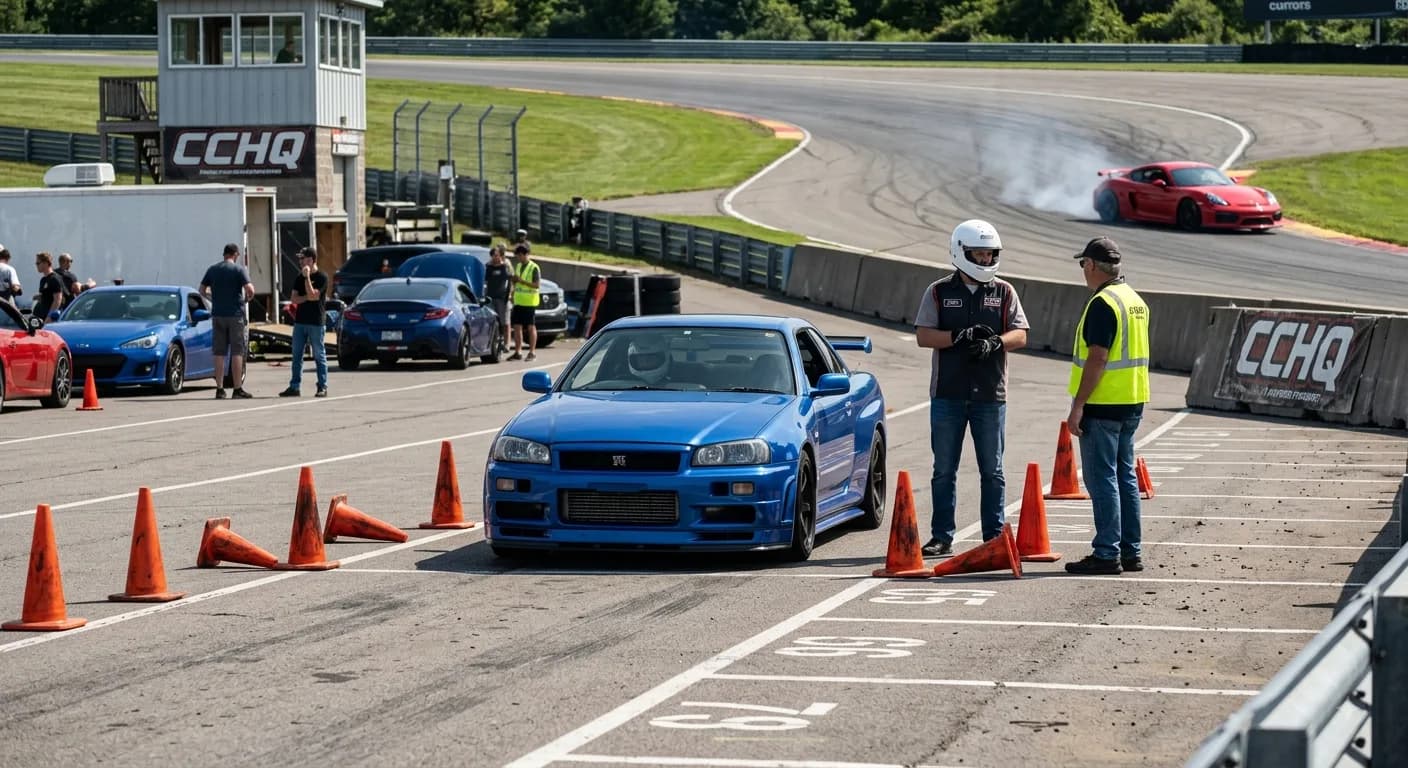
If you want to push your car past street limits, you have two main choices: Autocross or Track Days. We break down real costs, helmet rules, wear and tear on your car, and what actually happens when you show up to your first event so you do not waste money or blow up your daily driver.
Picking Your Grassroots Motorsport
At some point, driving fast on back roads stops being fun and starts being stupid. You realize the risk to your license, your car, and other people just is not worth it. That is when you start looking for an actual motorsport event.
The two main gateways for enthusiasts are Autocross (AX) and Track Days (HPDE). Both will make you a better driver, but they demand completely different budgets, safety prep, and vehicle wear. Here is how they stack up in the real world.
Autocross: Low Speed, High Intensity, Cheap Entry
Autocross events take place in massive paved parking lots or unused airfield runways. Regional clubs set up a fresh course using hundreds of traffic cones.
What the driving feels like: You get 4 to 6 runs per day, lasting around 40 to 60 seconds each. You rarely shift past 2nd gear, but your hands are working nonstop. It forces you to learn precise weight transfer, slaloms, and threshold braking.
The risk factor: Extremely low. If you misjudge a corner and slide off line, you take out a plastic cone. Worst case scenario, you scuff your clear coat or pick up some rubber marks.
The hidden requirement: Work shifts. At autocross, everyone works the course. When you are not driving, you stand out on the asphalt in the sun resetting cones that other drivers hit.
Track Days (HPDE): High Speed, Big Thrills, Real Expense
High Performance Driver Education events rent out full road courses like Watkins Glen, Laguna Seca, or local regional circuits.
What the driving feels like: You get 4 to 5 sessions per day, each lasting 20 to 25 minutes. You reach 100+ mph on straightaways, learn real racing lines, and practice passing in designated zones with point-bys.
The risk factor: Real. Track days are not wheel-to-wheel racing, but you are carrying serious momentum. If you lose control in a high-speed sweeper, tire walls and armco barriers do not move out of the way.
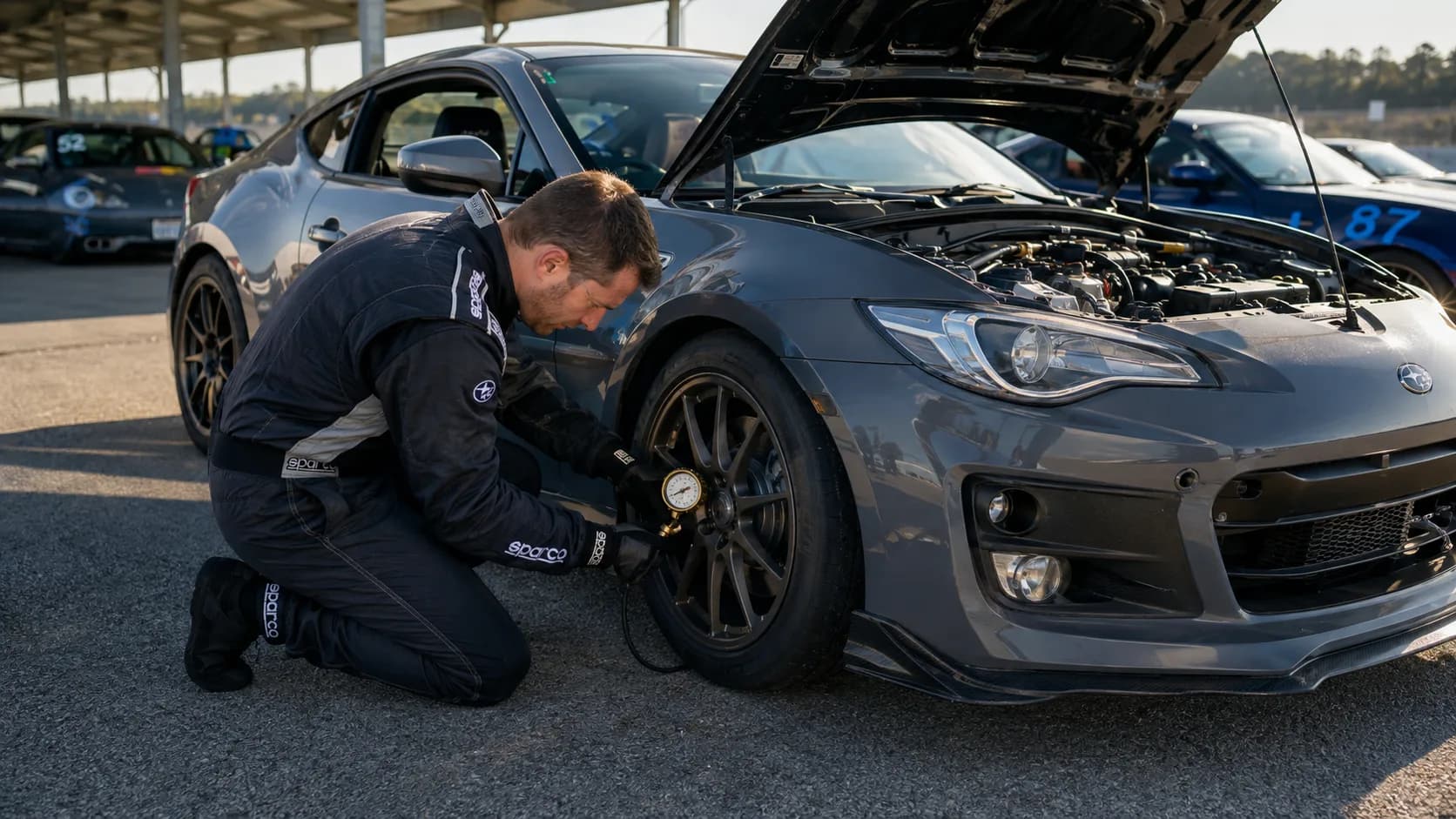
Vehicle stress: Four 20-minute sessions at wide-open throttle boil factory brake fluid, glaze street pads, and cook tire tread fast.
Join CarCultureHQ
Claim your free digital garage
Build your ride profile, log modifications, join a crew, and get your build in front of thousands of enthusiasts.
Create your free garageReal Cost Breakdown: Autocross vs. Track Day
Here is what you actually spend out of pocket for a weekend event:
Cost Item | Autocross (AX) | Track Day (HPDE) |
Entry Fee | $45 to $80 | $250 to $500+ |
Fuel Usage | Quarter tank of gas | Full tank (plus extra jugs) |
Fuel Usage | Snell SA or M rated (Loaners often available) | Snell SA15 or SA20 required |
Tire & Brake Wear | Minimal wear on daily tires | High wear (Requires high-temp pads/fluid) |
Tire & Brake Wear | Optional (Standard policy usually covers parking lot AX) | Track insurance recommended ($150 to $300) |
How to Prepare Your Car for Tech Inspection
Neither sport lets you on course in a dangerous vehicle. Before you arrive, run through basic mechanical checks:
Battery Tie-Down: Your battery cannot move an inch. A loose battery failing tech inspection is the most common reason beginners get turned away.
Brake Pedal & Fluid: The pedal must be rock hard. If your fluid looks like dark coffee, flush it before showing up.
No Leaks: Engine oil, coolant, or transmission fluid leaking onto the track creates a hazard for everyone behind you.
Wheel Bearings & Lug Nuts: Jack up each wheel, shake it at 12 and 6 o'clock to check for play, and torque your lug nuts to factory spec.
Join CarCultureHQ
Claim your free digital garage
Build your ride profile, log modifications, join a crew, and get your build in front of thousands of enthusiasts.
Create your free garageFrequently asked questions
Do I need a sports car to participate in autocross?
No. You can autocross almost any daily driver as long as it passes basic tech inspection and does not have a high center of gravity (like lifted trucks or tall SUVs that pose a rollover risk).
Can I use a motorcycle helmet for a track day?
Most track day organizations strictly require Snell SA (Special Application / Auto Racing) helmets because they are tested for roll cage impacts and flame resistance. Motorcycle helmets (Snell M or DOT) are usually only permitted for autocross.
Will my regular car insurance cover a track day accident?
Standard auto insurance policies almost always exclude damage sustained on a racetrack, even during non-timed HPDE events. Purchasing third-party track day insurance is the best way to cover your vehicle against physical damage.
How many track sessions do you get during an HPDE event?
A standard single-day HPDE schedule typically includes a morning driver briefing, classroom instruction for novices, and 4 to 5 driving sessions lasting 20 minutes each.

Comments
Join the conversation on Track Day vs. Autocross: Costs, Rules, and What to Expect. Keep it civil — admins moderate reports.
Loading comments…